To be liked is not unimportant. We are flock creatures. Being excluded in the cave age days actually meant life danger. We wouldn’t be part of the flock if we weren’t seen as good enough. This is too harsh of an attitude in todays society, but we haven’t changed much genetically, and excluding still rules most peoples’ basic behaviours. It explains why even small social signals tend to be over-interpreted, so we continuously watch out for social risks, as if it was almost life threatening and this makes us socially insecure. Unfortunately, group exclusion can result in unbearable loneliness, health problems and worse. We can’t control others behaviours, so let’s be realistic and see what it may take to be more liked.
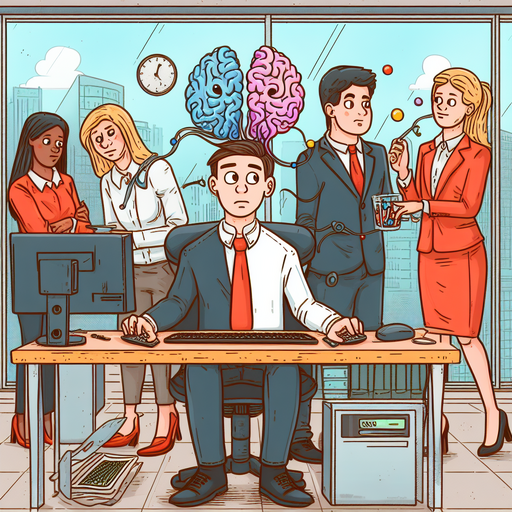
All illustrations done with Microsoft Designer, an AI tool based on OpenAI.
Exclusion
It is common for autistic people to be excluded from social and work groups. Research has found that it is mostly rooted in the fact that we behave rather differently, and not following all the established social “rules & regulations” of non-autistic people. Being different is “suspicious”, a potential threat, and the default caveman reaction is exclusion.
Autistic people often have difficulties understanding feelings in ourselves and in others, and hence not expressing the feelings or responding to them. And if we have realised our feelings, then we often don’t show it, having an expressionless face and static body language. Strong emotions might be going on inside, but it doesn’t show. We might also be afraid to show any emotions because of bad experiences in the past, having been ridiculed or misunderstood. Some say we avoid social situations and interactions, due to trauma from being bullied in childhood, while others say this is due to physical differences in the autistic brain, including the size of the amygdala. Social behaviour is partly determined by genes and partly from how we grew up and the experiences we have had. This is all good to know, but it doesn’t really help much to ponder on why we might behave odd in the eyes of others. Better go to action.
Social skills can certainly be learned, also by autistic people, but a limiting dilemma is that too much social faking of behaviours can be very harmful from the stress and even exhaustion which it can create over time. Each person will need to find an acceptable balance and also try to educate other people on our limitations and accept our natural behaviours, and to be somewhat open about our traumatic experiences. It is useful to think of three things which can make us more likeable:
- Warmth. Smiling wide, until the wrinkles show around our eyes, signals genuine warmth. A less profound smile can, on the contrary be perceived as fake and superficial. Smiling is also a proven way to self-manipulate into a better mood, so a win-win behaviour. Again, it might cause a certain stress, but probably the benefits much outweighs the efforts. A joke or funny comment can be quite a boost too. Some autistic people have a much appreciated kind of humour.

This image illustrates the autistic comedian Dan Aycroyd, the original script writer and a main actor in the film Ghost Busters. His twisted, unexpected humour and his warmth is liked across the globe. - Focusing on others. When asking questions, and followup questions, it makes us appear more present and interested. People typically like to talk about things like vacation plans, their children, their parents, sports, films… We are often afraid to show strong opinions about politics, religion, and sensitive issues. But, we shouldn’t be. It makes us interesting and more transparent, and it is acceptable as long as we fully respect that other people have the right to opposing opinions and beliefs. Autistic people love to talk about special interests. It can very interesting too, but we need to a cap it, because too many details and too lengthy usually become boring.
Another autistic habit is to swiftly become quite personal and direct in questions and answers, even within minutes of a conversation with a stranger. This is usually far too fast for most non-autistic people, who prefer a slower approach that can take (very) many conversations. Being too open too early can backfire if dealing with bad-intentioned people and in any case it does take time to get used to other peoples’ personalities and quirks. It can also create suspicion whether this sudden familiarity is a trick in order to obtain information.
Autistic people tend to avoid eye contact as we find it disturbing and quite unnecessary, even weird, while non-autistic people sees a lack of eye contact as a lack of interest. A compromise is for autistic people to look at eyebrows instead of the eyes, or to only make eye contact in short, but regular moments. It is also better to look up into “space” than to look down, if possible.
- Make people have confidence in us. Extroverted people may have an advantage in projecting warmth through smalltalk, laughter, smiling and dominating the social or work groups. But, this can also be signs of a dark triad personality (psychopath/sociopath, narcissist or manipulator/machiavellian). Introverted people have an advantage when trying to gain the confidence of other people, well expressed in the old saying “If speaking is silver, then listening is gold.” Everyone likes to be listened to, it builds confidence and the bonus is that we learn much more from listening than from talking.
Although autistic people are typically not very sociably skilled and active, we are above-average pro-social (socially constructive), certainly not anti-sociable (socially destructive), and we are typically trustworthy, kind, loyal and fighting for justice. That counts for confidence and likability too.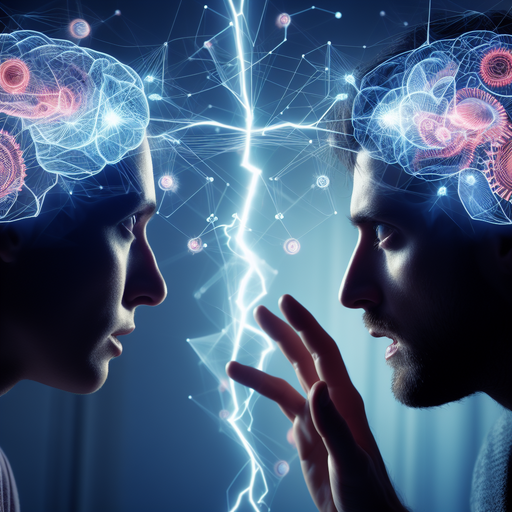
In summary
New behaviours always feel strange and artificial in the beginning, but then become internalised and automatic over time. Becoming more likeable should not be seen as becoming a smiling and chatting robot, but part of a liberating process where you can actually be yourself more and counter the primitive exclusion behaviours of others. And don’t forget to include those around you who are also excluded.
You might want to go to a mirror and start exercise your smiling, no harm possible 😊
 actuallyautistic.work